
Writesonic vs ChatGPT for Writing SEO Optimized Blog Int
Writesonic vs ChatGPT The first few lines of a blog post decide whether a reader continues reading or leaves the page.
You can spend hours researching keywords, creating an SEO strategy, and writing valuable content, but if your introduction fails to grab attention, many visitors will never reach the information you worked hard to create.
A strong blog introduction needs to do several things at the same time:
- Capture attention immediately
- Explain the problem clearly
- Build curiosity
- Show the reader what they will learn
- Include SEO-friendly context
- Encourage visitors to continue scrolling
This is where AI writing assistants have become extremely useful.
Instead of staring at a blank document trying to create the perfect opening paragraph, bloggers can now use AI tools to generate ideas, rewrite introductions, improve readability, and create stronger hooks.
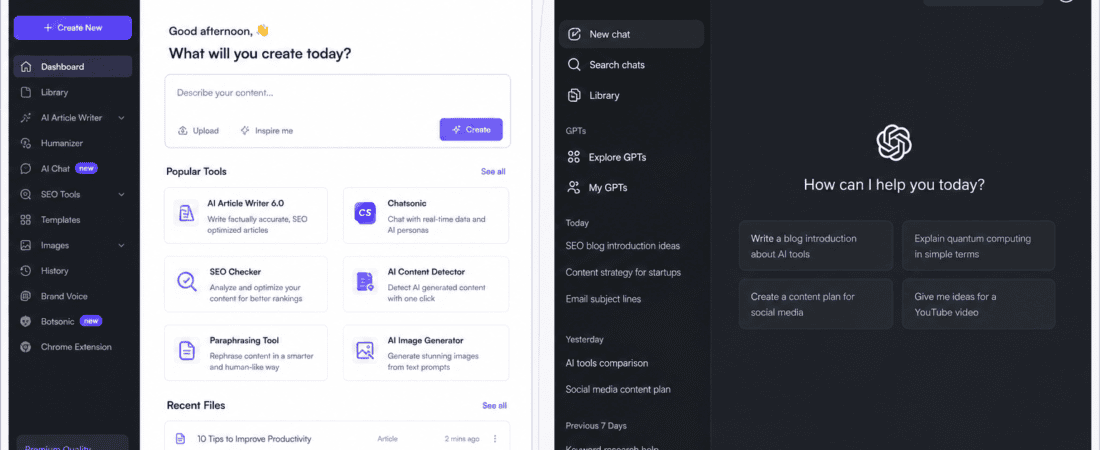
Two popular AI writing tools often compared by content creators are Writesonic and ChatGPT.
Both tools can help generate blog introductions, but they approach content creation differently.
Writesonic was created specifically for marketing content, SEO articles, advertisements, landing pages, and business copywriting.
ChatGPT is a general AI assistant that can help with almost any writing task, including blog planning, research assistance, SEO optimization, rewriting, brainstorming, and content improvement.
So which one is better for writing SEO optimized blog introductions?
The answer depends on what type of writer you are, what workflow you follow, and how much control you want over the final content.
In this detailed comparison, I will compare Writesonic vs ChatGPT based on:
- Introduction quality
- SEO optimization
- Human-like writing
- Creativity
- Keyword integration
- Blog hook generation
- Content understanding
- Beginner friendliness
- Free features
- Practical blogging experience
Writesonic vs ChatGPT for Blog Introductions: Quick Comparison
| Feature | Writesonic | ChatGPT |
|---|---|---|
| Main purpose | AI marketing writer | General AI assistant |
| Blog introduction writing | Excellent | Excellent |
| SEO-focused content | Strong | Strong with proper prompts |
| Keyword optimization | Built-in SEO features | Requires instructions |
| Creativity | Very good | Excellent |
| Human tone | Very good | Excellent |
| Blog research assistance | Good | Excellent |
| Content planning | Good | Excellent |
| Templates | Many | Flexible prompts |
| Long-form content support | Strong | Strong |
| Beginner friendly | Excellent | Excellent |
| Best for marketers | Writesonic | — |
| Best for custom workflows | — | ChatGPT |
What Makes a Good SEO Blog Introduction?
Before comparing the tools, it is important to understand what a successful introduction actually requires.
Many beginners think SEO means adding keywords everywhere.
That is not enough.
Modern search engines focus heavily on:
- Helpful content
- Search intent
- Reader satisfaction
- Natural language
- Expertise
- Engagement
A good introduction usually follows this structure:
1. Strong Opening Hook
The first sentence should make the reader curious.
Example:
Weak:
AI writing tools are becoming popular nowadays.
Strong:
Spending two hours writing a blog introduction that nobody reads is one of the biggest frustrations for content creators.
The second version immediately creates a connection.
2. Identify the Reader’s Problem
Readers continue when they feel:
“This article understands my problem.”
Example:
Many bloggers struggle with writing introductions because they know what information they want to share but cannot find the right words to make readers interested.
3. Present the Solution
The introduction should tell readers what they will get.
Example:
In this guide, we will compare Writesonic and ChatGPT to discover which AI tool creates more engaging SEO optimized blog introductions.
4. Create Curiosity
A good introduction should make readers want the answer.
Example:
Although both tools can generate impressive content, their approach to SEO writing is completely different.
What Is Writesonic?
Writesonic is an AI writing platform designed mainly for marketers, bloggers, agencies, and businesses.
The platform focuses heavily on content marketing tasks, including:
- Blog writing
- SEO articles
- Product descriptions
- Social media content
- Ads
- Landing pages
- Website copy
- Marketing campaigns
One reason Writesonic became popular among content creators is that it was built around practical marketing workflows rather than only being a general chatbot.
For bloggers who want a guided writing process, this can be helpful.
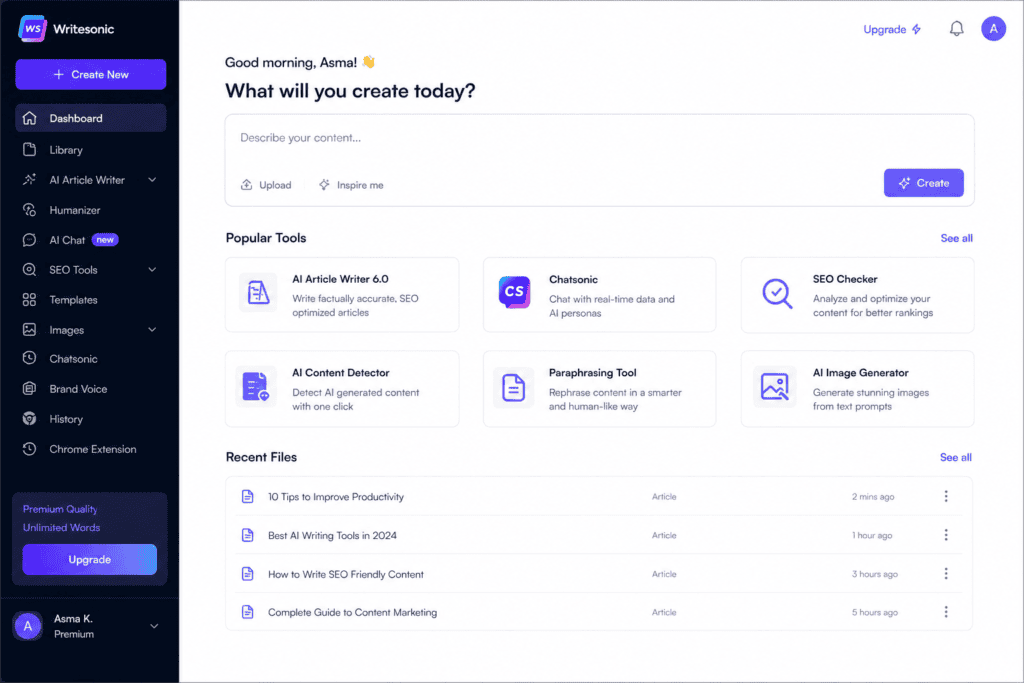
Instead of starting with a completely empty chat box, Writesonic provides structured tools and templates.
My Experience Using Writesonic for Blog Introductions
When I use Writesonic for blog introductions, the biggest advantage I notice is speed.
The platform feels designed for someone who already knows:
“I need a blog introduction for this keyword.”
For example, if my topic is:
“Best free AI tools for graphic designers”
I can provide the topic, target audience, tone, and content goal.
Writesonic quickly creates several introduction options.
What I like is that it often follows a marketing-style structure:
- Problem
- Pain point
- Solution
- Reason to continue reading
This is useful because many beginner bloggers struggle with creating an opening that connects with readers.
Instead of spending 30 minutes trying different ideas, I can generate multiple versions and select the strongest one.
However, I usually don’t publish the first generated version.
I treat it as a starting point.
I still edit:
- The wording
- The examples
- The tone
- The personal perspective
Because the best blog introductions should feel like they were written by someone who understands the audience.
Writesonic Strengths for SEO Introductions
1. Marketing-Focused Writing Style
One thing I notice about Writesonic is that it naturally understands promotional writing structures.
This can be useful for:
- Affiliate blogs
- SaaS articles
- Product reviews
- Business blogs
- Commercial content
For example:
Instead of simply saying:
There are many SEO tools available.
It may create a stronger angle:
Finding the right SEO tool can save hours of manual research and help your content reach the right audience faster.
That type of framing is useful for commercial keywords.
2. Faster Content Generation
If you are managing multiple blogs, speed matters.
A content team producing:
- 10 articles per week
- 50 articles per month
- Hundreds of SEO pages
needs efficient workflows.
Writesonic can help create first drafts quickly.
My workflow is usually:
- Enter topic.
- Add keyword.
- Choose tone.
- Generate introduction.
- Edit manually.
- Add personal examples.
This saves time compared with starting from zero.
3. SEO-Friendly Structure
Writesonic includes SEO-oriented features that help writers think about:
- Search intent
- Keywords
- Content structure
- Article organization
For beginners, this guidance can be valuable.
Many new bloggers do not know how to connect a keyword with an introduction.
An SEO tool that encourages strategic thinking can improve their writing process.
What Is ChatGPT?
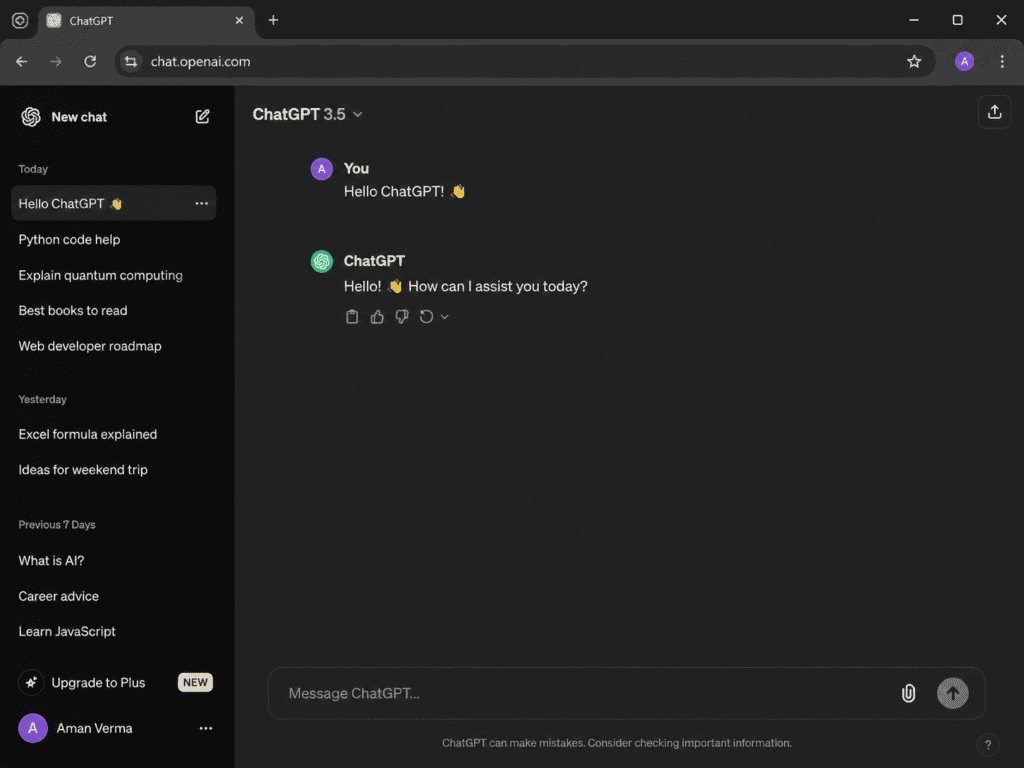
ChatGPT is a conversational AI assistant that can help with almost any writing-related task.
Unlike specialized AI writing platforms, ChatGPT does not focus only on marketing content.
It can help with:
- Blog ideas
- Keyword research brainstorming
- Content outlines
- Introductions
- Editing
- Rewriting
- SEO optimization
- Content strategy
- Research explanations
- Audience analysis
The biggest difference is flexibility.
ChatGPT does not force you into one workflow.
You tell it exactly what you need.
My Experience Using ChatGPT for Blog Introductions
What I appreciate most about ChatGPT is control.
When I write a blog introduction, I don’t always want a standard marketing formula.
Sometimes I want:
- A storytelling opening
- A personal experience angle
- A controversial hook
- A question-based introduction
- A beginner-friendly explanation
- A professional tone
ChatGPT handles these variations extremely well.
For example, instead of saying:
Write an introduction about AI tools.
I can provide detailed instructions:
Write an SEO optimized blog introduction for beginners. Start with a relatable problem faced by bloggers. Use a conversational human tone. Include the keyword naturally within the first 100 words. Avoid generic AI phrases.
The result is usually much closer to my intended style.
ChatGPT Strengths for SEO Blog Introductions
1. Unlimited Writing Styles
This is where ChatGPT is extremely powerful.
A single topic can have many possible angles.
Example:
Topic:
“AI tools for content creators”
Possible introductions:
Professional Style
Content creation has changed dramatically with the rise of artificial intelligence.
Storytelling Style
Three years ago, creating a complete content campaign required an entire team. Today, one creator with the right AI tools can accomplish the same workflow faster.
Beginner Style
If you feel overwhelmed by the number of AI tools available today, you are not alone.
ChatGPT can create all these variations easily.
2. Better Context Understanding
A blog introduction is not just about writing sentences.
It is about understanding:
- Who is reading?
- Why are they searching?
- What problem do they have?
- What solution do they expect?
ChatGPT is very strong at analyzing these questions.
For example, if the audience is:
“Small business owners”
the introduction should not sound like it was written for software developers.
ChatGPT can adjust accordingly.
3. Stronger Personalization
Modern SEO is moving toward helpful, experience-based content.
Generic introductions are everywhere.
The difference comes from adding:
- Personal observations
- Examples
- Opinions
- Real situations
ChatGPT is useful because you can instruct it:
Write this introduction as if I am a social media manager explaining my experience using AI tools.
That creates a more personal style.
Writesonic vs ChatGPT: Introduction Quality Test
Let’s compare the same topic:
Topic:
“Best Free AI Tools for Bloggers”
Writesonic Style:
Creating high-quality blog content requires time, research, and creativity. Fortunately, free AI tools are helping bloggers speed up their workflow and improve productivity.
This is clear and useful.
ChatGPT Style:
The hardest part of blogging is not always writing the article. Sometimes it is finding enough time to research ideas, organize information, and create content that actually connects with readers.
This feels more like a human observation.
Both are good.
But the difference is:
Writesonic often thinks like a content marketer.
ChatGPT often thinks like a writing partner.
Writesonic vs ChatGPT for Writing SEO Optimized Blog Introductions: Which AI Tool Creates Better Hooks?
The first few lines of a blog post decide whether a reader continues reading or leaves the page.
You can spend hours researching keywords, creating an SEO strategy, and writing valuable content, but if your introduction fails to grab attention, many visitors will never reach the information you worked hard to create.
A strong blog introduction needs to do several things at the same time:
- Capture attention immediately
- Explain the problem clearly
- Build curiosity
- Show the reader what they will learn
- Include SEO-friendly context
- Encourage visitors to continue scrolling
This is where AI writing assistants have become extremely useful.
Instead of staring at a blank document trying to create the perfect opening paragraph, bloggers can now use AI tools to generate ideas, rewrite introductions, improve readability, and create stronger hooks.
Two popular AI writing tools often compared by content creators are Writesonic and ChatGPT.
Both tools can help generate blog introductions, but they approach content creation differently.
Writesonic was created specifically for marketing content, SEO articles, advertisements, landing pages, and business copywriting.
ChatGPT is a general AI assistant that can help with almost any writing task, including blog planning, research assistance, SEO optimization, rewriting, brainstorming, and content improvement.
So which one is better for writing SEO optimized blog introductions?
The answer depends on what type of writer you are, what workflow you follow, and how much control you want over the final content.
In this detailed comparison, I will compare Writesonic vs ChatGPT based on:
- Introduction quality
- SEO optimization
- Human-like writing
- Creativity
- Keyword integration
- Blog hook generation
- Content understanding
- Beginner friendliness
- Free features
- Practical blogging experience
Writesonic vs ChatGPT for Blog Introductions: Quick Comparison
| Feature | Writesonic | ChatGPT |
|---|---|---|
| Main purpose | AI marketing writer | General AI assistant |
| Blog introduction writing | Excellent | Excellent |
| SEO-focused content | Strong | Strong with proper prompts |
| Keyword optimization | Built-in SEO features | Requires instructions |
| Creativity | Very good | Excellent |
| Human tone | Very good | Excellent |
| Blog research assistance | Good | Excellent |
| Content planning | Good | Excellent |
| Templates | Many | Flexible prompts |
| Long-form content support | Strong | Strong |
| Beginner friendly | Excellent | Excellent |
| Best for marketers | Writesonic | — |
| Best for custom workflows | — | ChatGPT |
What Makes a Good SEO Blog Introduction?
Before comparing the tools, it is important to understand what a successful introduction actually requires.
Many beginners think SEO means adding keywords everywhere.
That is not enough.
Modern search engines focus heavily on:
- Helpful content
- Search intent
- Reader satisfaction
- Natural language
- Expertise
- Engagement
A good introduction usually follows this structure:
1. Strong Opening Hook
The first sentence should make the reader curious.
Example:
Weak:
AI writing tools are becoming popular nowadays.
Strong:
Spending two hours writing a blog introduction that nobody reads is one of the biggest frustrations for content creators.
The second version immediately creates a connection.
2. Identify the Reader’s Problem
Readers continue when they feel:
“This article understands my problem.”
Example:
Many bloggers struggle with writing introductions because they know what information they want to share but cannot find the right words to make readers interested.
3. Present the Solution
The introduction should tell readers what they will get.
Example:
In this guide, we will compare Writesonic and ChatGPT to discover which AI tool creates more engaging SEO optimized blog introductions.
4. Create Curiosity
A good introduction should make readers want the answer.
Example:
Although both tools can generate impressive content, their approach to SEO writing is completely different.
What Is Writesonic?
Writesonic is an AI writing platform designed mainly for marketers, bloggers, agencies, and businesses.
The platform focuses heavily on content marketing tasks, including:
- Blog writing
- SEO articles
- Product descriptions
- Social media content
- Ads
- Landing pages
- Website copy
- Marketing campaigns
One reason Writesonic became popular among content creators is that it was built around practical marketing workflows rather than only being a general chatbot.
For bloggers who want a guided writing process, this can be helpful.
Instead of starting with a completely empty chat box, Writesonic provides structured tools and templates.
My Experience Using Writesonic for Blog Introductions
When I use Writesonic for blog introductions, the biggest advantage I notice is speed.
The platform feels designed for someone who already knows:
“I need a blog introduction for this keyword.”
For example, if my topic is:
“Best free AI tools for graphic designers”
I can provide the topic, target audience, tone, and content goal.
Writesonic quickly creates several introduction options.
What I like is that it often follows a marketing-style structure:
- Problem
- Pain point
- Solution
- Reason to continue reading
This is useful because many beginner bloggers struggle with creating an opening that connects with readers.
Instead of spending 30 minutes trying different ideas, I can generate multiple versions and select the strongest one.
However, I usually don’t publish the first generated version.
I treat it as a starting point.
I still edit:
- The wording
- The examples
- The tone
- The personal perspective
Because the best blog introductions should feel like they were written by someone who understands the audience.
Writesonic Strengths for SEO Introductions
1. Marketing-Focused Writing Style
One thing I notice about Writesonic is that it naturally understands promotional writing structures.
This can be useful for:
- Affiliate blogs
- SaaS articles
- Product reviews
- Business blogs
- Commercial content
For example:
Instead of simply saying:
There are many SEO tools available.
It may create a stronger angle:
Finding the right SEO tool can save hours of manual research and help your content reach the right audience faster.
That type of framing is useful for commercial keywords.
2. Faster Content Generation
If you are managing multiple blogs, speed matters.
A content team producing:
- 10 articles per week
- 50 articles per month
- Hundreds of SEO pages
needs efficient workflows.
Writesonic can help create first drafts quickly.
My workflow is usually:
- Enter topic.
- Add keyword.
- Choose tone.
- Generate introduction.
- Edit manually.
- Add personal examples.
This saves time compared with starting from zero.
3. SEO-Friendly Structure
Writesonic includes SEO-oriented features that help writers think about:
- Search intent
- Keywords
- Content structure
- Article organization
For beginners, this guidance can be valuable.
Many new bloggers do not know how to connect a keyword with an introduction.
An SEO tool that encourages strategic thinking can improve their writing process.
What Is ChatGPT?
ChatGPT is a conversational AI assistant that can help with almost any writing-related task.
Unlike specialized AI writing platforms, ChatGPT does not focus only on marketing content.
It can help with:
- Blog ideas
- Keyword research brainstorming
- Content outlines
- Introductions
- Editing
- Rewriting
- SEO optimization
- Content strategy
- Research explanations
- Audience analysis
The biggest difference is flexibility.
ChatGPT does not force you into one workflow.
You tell it exactly what you need.
My Experience Using ChatGPT for Blog Introductions
What I appreciate most about ChatGPT is control.
When I write a blog introduction, I don’t always want a standard marketing formula.
Sometimes I want:
- A storytelling opening
- A personal experience angle
- A controversial hook
- A question-based introduction
- A beginner-friendly explanation
- A professional tone
ChatGPT handles these variations extremely well.
For example, instead of saying:
Write an introduction about AI tools.
I can provide detailed instructions:
Write an SEO optimized blog introduction for beginners. Start with a relatable problem faced by bloggers. Use a conversational human tone. Include the keyword naturally within the first 100 words. Avoid generic AI phrases.
The result is usually much closer to my intended style.
ChatGPT Strengths for SEO Blog Introductions
1. Unlimited Writing Styles
This is where ChatGPT is extremely powerful.
A single topic can have many possible angles.
Example:
Topic:
“AI tools for content creators”
Possible introductions:
Professional Style
Content creation has changed dramatically with the rise of artificial intelligence.
Storytelling Style
Three years ago, creating a complete content campaign required an entire team. Today, one creator with the right AI tools can accomplish the same workflow faster.
Beginner Style
If you feel overwhelmed by the number of AI tools available today, you are not alone.
ChatGPT can create all these variations easily.
2. Better Context Understanding
A blog introduction is not just about writing sentences.
It is about understanding:
- Who is reading?
- Why are they searching?
- What problem do they have?
- What solution do they expect?
ChatGPT is very strong at analyzing these questions.
For example, if the audience is:
“Small business owners”
the introduction should not sound like it was written for software developers.
ChatGPT can adjust accordingly.
3. Stronger Personalization
Modern SEO is moving toward helpful, experience-based content.
Generic introductions are everywhere.
The difference comes from adding:
- Personal observations
- Examples
- Opinions
- Real situations
ChatGPT is useful because you can instruct it:
Write this introduction as if I am a social media manager explaining my experience using AI tools.
That creates a more personal style.
Writesonic vs ChatGPT: Introduction Quality Test
Let’s compare the same topic:
Topic:
“Best Free AI Tools for Bloggers”
Writesonic Style:
Creating high-quality blog content requires time, research, and creativity. Fortunately, free AI tools are helping bloggers speed up their workflow and improve productivity.
This is clear and useful.
ChatGPT Style:
The hardest part of blogging is not always writing the article. Sometimes it is finding enough time to research ideas, organize information, and create content that actually connects with readers.
This feels more like a human observation.
Both are good.
But the difference is:
Writesonic often thinks like a content marketer.
ChatGPT often thinks like a writing partner.
Check out here if you want to know about Ultimate Free AI Tools for Catchy Email Subject Lines